I recently saw Star Trek Picard, the first season was okey, season 2 was awful, the season 3 was nice.
Acording some critics last Discovery season is bad, so now I’m afraid of looking a series who has a bad ending, it worth to watch or is as painful as Picard Season 2? Or I should watch Strange New Worlds and Enterprise instead?
You must log in or # to comment.
Really bad. I want some philosophy. Some slow, quiet discussions. Discovery is all bombast and action. No substance.
It’s always worth remembering that the people who dislike something tend to be the loudest.
There’s no doubt reactions to Discovery have been mixed. Personally, I enjoyed it. It was uneven and flawed and sometimes frustrating. But there were enough good moments to keep me going. I don’t think anyone can tell you if you’ll enjoy it… You just have to try it and see.
There’s no doubt reactions to Discovery have been mixed.
I feel it’s important to note that a lot of the “reactions” we see today are the result of coordinated review-bombing campaigns by “anti-woke” outrage-peddling youtubers.
That’s not to say it’s universally beloved among Trekkies online, just that for someone trying to suss out the “reception” is going to have a difficult time separating authentic reviews from inauthentic ones.
Discovery was so bad I had to stop after season 2 and have written off everything that they’ve set in the 31st century
Discovery was never bad. It’s just different. Some people say it’s not what Trek is about.
-
Star Trek has always been about captains exploring. Deep Space Nine challenged that with a commander; Sisko later made captain, but the station itself only moved in the pilot (closer to the wormhole; it’s always been in Bajor’s orbit) and maybe one other time? But they did plenty of exploring in the Runabouts, and Defiant, the ship they got later. But essentially the action came to them, and that was fine. Discovery is not about a captain. Michael Burnham is a… commander? I forget. On the original ship. Then she’s nobody. She gets promoted up but she almost never leads, but the show focuses on her. It’s… weird. (And she’s a woman… named Michael… pronounced the same as the male name… and this is never explained.)
-
Star Trek has always been about diversity, but Discovery had a gay couple in an openly sexual relationship. It never showed sex between them, but plenty of kissing and intimacy. Discovery also had a non-binary character with they/them pronouns. And as mentioned, a woman named Michael, but she’s cisgendered and straight, so that’s not why she has a guy’s name. Anyway, some people thought it was a few bridges too far.
-
Star Trek has almost always been wholesome. Deep Space Nine pushed the envelope, and while it showed Sisko doing some very bad things, profanity was never part of it, and the violence was mostly PG. Discovery was on streaming, so they had profanity and R-rated violence. There may have even been some mild nudity, I don’t recall. This put off a lot of traditional fans.
-
Before Deep Space Nine (i.e. The Original Series and The Next Generation), Star Trek has always been episodic. DS9 introduced arcs, but each episode still had its own identity, and this was true through Enterprise. But each season was its own thing on Discovery, and no one episode really stood alone.
Points 3 and 4, and to some, point 2, put off some older, “traditional” Trekkers who felt that Discovery was made for the younger generation and was not “for” them. And I can dig it. I mean, it does follow the recent-ish films where the ships are flashy, not tacky with their tech. (Keep in mind, the ships were always flashy for their time! It’s just, we cling to the old designs and the newer, flashier one just seems excessive, but now, the newer, flashier one is dull in comparison to the ones that have followed it.)
As for Picard, that was purely a sequel to The Next Generation (and to a lesser extent, Voyager, because of Seven of Nine). It was a love letter to the fans of that show, those shows. As purely its own thing, it’s a weaker Trek entry, but for those of us who grew up with 80s/90s Trek, it was good closure since the movies were neglecting those characters. Another such show might be Prodigy, which is a more direct continuation of Voyager, but Prodigy stood on its own better with its original cast. Picard’s original cast was not very good, but very forgettable.
Back to Discovery, it’s very much its own thing, set both before TOS and after anything else (minor spoilers — plot device allows them to swerve around any continuity problems). It did launch Strange New Worlds, which Trekkers seem to like more than Discovery, as that is a straight TOS prequel, showing the (movies/newer) original Enterprise under Captain Pike, who was captain before Kirk. Spock’s in it, too. (I have yet to watch SNW, but I plan to. I just finished Prodigy and I like to space them a bit.) Discovery also launched Section 31, the streaming-only movie, which is about as bad as you’ve heard. The less said about that one, the better — if you want to watch it, you should, and you should do so without worrying what Internet People think about it. It’s still Star Trek, albeit some of the weakest Trek out there.
Personally, I rate Discovery above ENT but below Voyager. I have a hard time deciding whether Discovery or Prodigy is better. Prodigy was a computer-generated anime that aired on Nickelodeon and that all sounds bad, but it was actually very good. It might seem at first that Kate Mulgrew (Janeway/Hologram Janeway) is there to prop the cast up, but they all shine so brightly, they don’t really need her as much as they think. I liked TNG, DS9, and VOY all better than STD and… whatever we’re abbreviating Prodigy to (PRO? STP?). As a child of the 80s, TOS is a bit dated for me, but the stories were so good… that’s another one that is hard to place for me.
I recommend you watch it, but if you do, you have to finish the season. You can’t drop it mid-season, and if you do, you can’t judge it, because the individual episodes aren’t meant to be watched on their own. It’s meant to be binged. That said, you can safely stop at the end of any season. I won’t say it gets worse, but each season made me wonder if it was really necessary, including the first one. Because no, it isn’t. Discovery is not necessary for… anything… in the Star Trek universe. It’s not really connected. Even Strange New Worlds… they ran into the Enterprise in the beginning of the second season, but then they went away. So yeah, you can safely watch SNW without Discovery and you’d be fine. I do think the first season was good, as far as action Trek goes. And you can stop there, but with the way it ends… you won’t. Season 2 was okay, a good mystery, and you can stop there, but you still may want to see what comes next. After that, I think the quality does take a bit of a dive, but then they’re in the far future, and you just wanna see more and more of what’s left of Starfleet in the future. And it’s good enough to stick with. But never necessary. And that’s probably the “worst” thing I can say about it.
but then they’re in the far future, and you just wanna see more and more of what’s left of Starfleet in the future.
I never softened on that particular development. The Star Trek Universe I know and love is based in optimism, and I want to believe in a Federation that keeps adapting, improving, and ultimately continuing as a positive force moving forward through the dedicated collaboration of an infinitely-diverse collaboration of peoples.
Disco took that basic core of all the flavors of Trek we’ve ever had and said “LOL never mind, all the principled and optimistic stuff you loved leads to a dystopian crapsack future and everyone’s sadder assholes than before, u mad?”
I’m so confused by this comment. Season three is literally (literally) about “a Federation that keeps adapting, improving, and ultimately continuing as a positive force moving forward through the dedicated collaboration of an infinitely-diverse collaboration of peoples” even in the face of overwhelming odds to the contrary.
I agree Discovery over Enterprise.
It’s hard to hold up the show that showed our first hero captain in the franchise not only condoning but choosing torture as an alternative as being ‘more optimistic’ or ‘more in line with Star Trek’s aspirational vision.’
Then there’s its sharp retrograde to bro culture.
BTW I’m almost as longtime a fan as possible.
My first episode was TOS ‘Devil in the Dark’ on the day it first broadcast in Canada in early 1967.
Since then, I have seen every episode in first run the week it aired EXCEPT when Enterprise went off the rails after 9/11, trying to be an apologia for the appalling reaction of the US which suddenly condoned torture and violations of the international rules based order.
Well said, Enterprise is my least favorite… until Season 4 which I consider to be some of my favorite Star Trek.
But same goes for Discovery! I appreciated what they were trying to do but it didn’t click with me. And then seasons 4 and 5 I consider to be some of Trek’s best.
Yes, there were a few great season one Enterprise episodes such as ‘The Andorian Incident’ directed by Roxann Dawson of Voyager and guest starring Jeffrey Coombs as Shran but it was the fourth season that truly redeemed the show.
I am one of those older traditional Trekkers you mentioned (btw our generation prefers “trekkies”) and I actually enjoyed Discovery a lot. It’s definitely not one of my favorite Trek series though because of 2 things:
- It’s Trek in name only. You said it’s totally disconnect from the other shows and you’re right. But it’s more than that. It’s not just disconnected from the other Trek series, it’s disconnected from Trek. It feels like they had a generic space/action show and decided to increase the viewership by naming one of the characters Spock and giving a few nods to the Trek franchise. Again: I liked it. I thought it was a really good generic space/action romp. But all other Trek shows have a particularly different view of humanity and history, a core innocence that’s put to extreme tests again and again, while the characters in Discovery couldn’t care less about that stuff.
- It is completely detached, plotwise, from all other Trek (which you already mentioned). In a way that’s actually great because of my point #1. Because of that detachment I can look back on it with greater fondness, like the way you might have a particular circle of friends that you like even more because they never met your mom.
There is one HUGE exception to #1 and #2 above, and that’s the appearance of our good friend Mr. Kirk’s predecessor. There are a couple episodes that gave me the biggest chills from the old days, and if you saw the show (and you’re of a certain age) then you know exactly which episodes I’m talking about.
I’ve never heard of Trekkies as a generational term. I’ve always understood that Trekkers were people who enjoyed the show as a show (they’re on the Trek) whereas Trekkies enjoy the show as part of the show (they’re in the Trek). Like they believe Trek is real, or it’s our actual future, and that Klingons and Vulcans are out there somewhere. Gene Roddenberry preferred this term because the show is about hope, that things will get better to where the show is, and that when things are bad on the show, hope that they will be better or that it will all work out in the end. But me? I just like it as a show. It’s not “real” to me.
Though, I suppose everyone’s relationship with Star Trek (or, any other franchise) is unique and personal to them and you can’t just divide the fans into two categories. Still, that is what I always understood the difference between the two types was, as we are a franchise that has two names for its fans.
Regarding what you said about them having a generic space show and naming it Star Trek. That has happened before. Deep Space Nine exists because the guy made Babylon 5 pitched it to Paramount and they ran him off and stole his idea. Yes, Deep Space Nine is awesome and we love it, but it would not exist if not for Babylon 5, which we should all be thankful we also got. To this day no one who wasn’t involved knows exactly how much DS9 took from B5, but DS9 was not originally Star Trek, and it was widely criticised for not being Star Trek being that they were not exploring and that they were on a space station. I imagine a lot of episodes of TV started out as something else, some unconnected idea that was shoehorned into that show in the writers room. So while I don’t doubt that Discovery may have not been an original Trek idea, I do not care because neither was DS9 and I love DS9.
I’m not disagreeing with you, though, and I agree with some of your clarifications, particularly in point 1.
-
The central character of the show is the least interesting person on it somehow despite having what could have been a good back story.
Everyone else seems to be some sort of real person to me. She is just so boring and flat and everything revolves around her for no real reason. Her purpose seems to be to be the fence post that stands there and eventually cries.
The best thing about the show was it gave us Anson Mount as Pike and he is outstanding. He was so good as Pike we got SNW as a spinoff.
I’ll be honest, I can’t remember all my particular criticisms, but here’s my impressions that I have left:
It’d be more accurately titled Star Trek: Burnham, because 95% of the time, every problem or mystery is somehow related to Burnham, everyone else is just supporting cast.
Like Picard, each season felt very disconnected from the others, there’s some continuity, but you could almost name the season based on the feel of an episode.
Plots more often than not felt underwhelming, as they were solved by essentially deus ex machina, mcguffins, surprise reveals or abrupt character changes.
It was largely visually ok, actors all did at least a decent job.
I have 0 desire to ever rewatch a single episode.
It’d be more accurately titled Star Trek: Burnham
I always called it ‘The Burnham Show, starring Michael Burnham’.
It was crazy to me how they could make every plot line revolve around her in some way, have her always be part of figuring out the solution, everyone else fawning over how great she is and what they’d do without her, just the lengths the writers went to to insert her everywhere. It’s just so on your nose and gets really tiring after like 3 seasons.
Compared with like DS9 where you could have whole episodes where the main character, Quark, only has like 1-2 lines and they focus more on supporting cast like Cisco or just Bashir and Garrek (sorry, I couldn’t resist :) )
everyone else fawning over how great she is
Did we watch the same show? She is literally demoted and sent to prison in the first episode.
@Corgana she did redeem herself.
You’re suggesting that redemption from disgrace is the same as “everyone else fawning over how great she is and what they’d do without her”?
@Corgana That’s what redemption is about. It’s recognizing that even the greatest among us make mistakes and can still be great.
Do you have any evidence to support your claim? I looked it up and I didn’t see anything about “redemption” necessitating the fawning over of the redemptee by others, so until someone claims otherwise I’m going to believe Mr. Webster.
@Corgana People fawned over her because she was a loving character who did great. That greatness emerged from her redemption and would have been lost to whatever the Federation’s idea of a prison cell in the 23rd century otherwise.
I’ve been on social media for a while and I have to say, this has all the hallmarks of a flame war. So this is all I’m going to have to say on the matter. You can throw darts at her photograph on your own wall.
Discovery is fine. It takes some weird turns, sort of a necessity since they chose to make it a prequel with a unique propulsion system. And it is not like the 90s shows. And there’s a vocal group of fans that hate it just because it’s different, it was the first show coming back from the long show hiatus, and many are simply incapable of admitting that.
Picard’s seasons are all weird in their own way and with their own flaws, totally separate from Disco.
Watch the first season and make your own decision. Star Trek fans are some of the worst for having outsized online hatred of shit that doesn’t matter.
fans that hate it just because it’s different
Fans hated it not solely because it was different, that’s hardly a reason. They hated it because:
- For the first time, Starfleet officers were emotionally-stunted or plain assholes instead of well-adapted officers.
- The series revolved around a divisive character, hoping I guess that some people would become hardcore fans of Michael.
- It intentionally wrecked canon, even one of the producers proudly said he didn’t watch Star Trek to avoid preconceptions.
- Tech doesn’t make sense for its time. Practically none of it made any sense for a prequel, maybe if it had been a sequel.
- The forced linking of the main protagonist to Spock was unbelievable, more so because it somehow gave her Vulcan powers by osmosis.
- It promoted itself as progressive, but all it did was including a gay couple and a non-binary girl. The important characters were all cis, or left unspoken.
It wasn’t just different, it was bad. Really bad. It was like a vuvuzela in an acoustic song.
And this is coming from someone who watched a season and a half before quitting, but who loved Enterprise, who also had its glaring flaws, but was true to canon.
I don’t think Adira is a nonbinary girl, I think they’re just nonbinary. Their boyfriend was also trans for what it’s worth.
Georgiou is also pansexual, though that’s not particularly progressive (classic depraved bisexual trope), and Jett Reno was married to a woman.
So while you’re right, most of the major cast is cishet, I think there’s more people who hate it for being “woke” than for being not progressive enough, as I haven’t heard the latter much but the former is annoyingly common from the usual suspects. There simply hadn’t been actual representation of any of those groups (except the depraved bisexuals) in Star Trek before Discovery.
Also, as for “Vulcan powers”: we’ve always known that Vulcan logic is learned and not innate. Vulcans are naturally wildly emotional, their logic is basically just advanced meditation techniques, so it makes sense that a human raised by Vulcans could learn them. We’ve also seen non-Vulcans use the iconic nerve pinch before, it’s essentially just a Vulcan martial art and nothing to do with Vulcan biology. Picard and Data could both do it.
The only “Vulcan power” tied to their biology really is the mind meld, and that’s because Vulcans are mildly telepathic. Non-Vulcan telepaths could learn it too. I don’t think we ever saw Burnham initiate a mind meld though.
When I said Adira is a nonbinary girl, I meant she is female of sex and nonbinary of chosen gender.
it was a big deal when they announced her, but the treatment was milquetoast and timid. Same with the few non-cis characters, they were tokens, the show didn’t have the courage to depict a future where a diverse gender philosophy is widely accepted. They yellowed out of it and presented as if it was still our time. I don’t dislike the show for being woke, I dislike it for being shallow woke.
Same with the rest of it, it was 90% SFX and 10% writing. With long series like TNG you can afford the luxury of experimenting and fumbling the ball some weeks, it Discovery and Picard and massive productions that only have 12 episodes a year. They had to make every one of those count.
About Michael ‘s learned Vulcan powers, I don’t buy that. She was best than the Vulcans at their own academy, seemingly an expert at hand to hand combat, basically a prodigy at everything she wanted to do. That’s bad writing, super geniuses are too easy to write, so they had to make her emotionally immature to give her some challenge. Given she cried almost every episode, I’d seriously doubt she took to heart those meditation lessons.
It is a very flashy but bad show overall. If it hadn’t carried the name of Star Trek, it might have carved a niche in Sci-Fi, though. Space novels were called Space Operas after all.
I just don’t understand this “Vulcan powers” criticism. She was a prodigy, sure, and pretty good at doing anything she wants, but that’s a broader issue. I don’t recall any point where she showed any Vulcan abilities that would be implausible for a human to learn from being raised in that culture. Even if you could argue it contributes to her being good at too many things, that has nothing to do with Vulcans specifically.
And I find it very ironic that you’re complaining about the portrayal of trans characters not being progressive enough while misgendering Adira. Adira is non binary. They are not a girl, and they explicitly make it clear in the show they use they/them pronouns. Girl refers to gender, not sex, and furthermore sex isn’t relevant to 99% of conversations so you don’t need to disambiguate by finding a replacement word.
Frankly, I think Adira and Gray’s transness was handled quite well. I’m not sure what makes them tokens to you. Adira has more lines than most of the bridge crew, and the little queer family unit of Stamets/Culber/Adira gets quite a bit of development and screen time. Gray gets his time in the spotlight too, and gets a bit of character development of his own.
Both Gray and Adira are immediately accepted and never questioned by anyone on the crew. That’s a far cry from presenting it as if it were still our time. No one trips up on either of their pronouns once. You yourself refer to Adira with she/her in your comment.
The main difference between Adira and Gray is that Gray already came out and transitioned off-screen, while Adira comes out on-screen. I think their coming out scene is well done and realistic; even in the Trek future people will have to come out to some extent because people clearly default to binary pronouns. They aren’t mind readers, and they haven’t replaced all pronouns with they/them, so it’s only natural that one would have to explicitly tell people their pronouns.
Stamets immediately accepts Adira, with zero questions about nonbinary identity or pronouns, and then seemingly informs the rest of the crew off-screen. I don’t know what you think coming out nowadays is like, but that’s not the reaction most of the time. Adira comes off as kind of nervous in the scene, but they’re talking to someone they barely know at this point who arrived from hundreds of years ago. Plus they’re just a nervous person in general. I think it works well.
And Gray doesn’t have to come out at all, he’s accepted as male from day one. His transness only ever comes up as vague references to transitioning. Seems pretty accepted to me!
I fully accept I have difficulty with using these pronouns. English is not my first language, and in my daily life I know zero nonbinary people, literally zero, so I don’t get to practice. I’ve only seen trans people on TV, or in discussions on the Internet, so I don’t get to practice those either. Sometimes I wonder why it’s such a prominent issue on the media, specially American media.
I know a handful of people that are gay or lesbian, but they’re not into choosing special gender pronouns. So my only practice before this discussion was another online discussion more than a year ago.
I suppose I’m confused what your issue with the trans characters is then. I thought at first you wished there were more, but now you’re saying you don’t understand why it comes up so often?
I understand the difficulty getting used to new pronouns. It’s great that you’re doing your best to understand despite not having much experience with it. I was just trying to point out that the portrayal in Trek is already showing a world that accepts trans and nonbinary people far more naturally than IRL, even if there could be more representation of actual queer folks.
If I can present examples to you of those things happening in other Star Trek series would it change your mind about those other series?
Or does this list of criteria selectively apply specifically to Discovery?
You’ve said it, examples. All series have their flaws, but overall their qualities made them last. Who hasn’t heard of someone binging all of TNG? Who has heard someone say “Discovery was so good I’m rewatching it with my friends”?
Why is it when those things you listed show up on other Star Trek series you consider them to be “flaws” on an “overall quality” show, but on Discovery they become “reasons to hate”? Why the double standard?
Those are reasons to hate any show. Discovery made the mistake of being made mostly of that.
It just feels awfully weird to me that your list of criteria that makes a show “hateable” only applies to this particular show. And when another show checks off the items, the list suddenly stops being “hateable items” and instead becomes a list of minor nitpicks.
I just can’t figure out what the difference is, what could it be about Discovery in particular that would cause you to hold this list of criteria with such gravitas, but when the listed items appear on a different show, you don’t seem to mind? What could the difference be?
Again, let me explain it as a metaphor:
a) You want to buy a new house, it’s beautiful although there’s a few leaks here and there, but the rest of the roof is solid. You decide you like it.
b) You want to buy a new house, it’s beautiful although most of the roof has leaks. You decide it’s not wort the effort.
There is an entire season about warp drive not working anywhere in the universe. It turns out that it stopped working because an alien got really sad. Not because he did anything because he was sad, just because he got sad. Ohh, and somehow the Vulcans, with all their logic, never thought of tracking down the cause by triangulation.
That was the end of the series for me.
This, and he wanted connection from someone of his species, and the first officer of the one ship that can overcome the plot debuff happens to be that species, a species we barely see outside this plot…it’s writing so bad you can’t see the show through it. Emotional stories are appropriate, it’s why Troi was a bridge officer. But this show was constantly setting up unsolvable problems that could only be fixed by this one crew, which breaks immersion. Good trek doesn’t have 50 Galaxy or universe ending threats only fixable by plot-armored main characters, it has ship, person, and planet level threats giving you the space to appreciate the human story. Even DS9 kept the stories on missions while the thread of the war was just a hum with reasonable stakes.
I really find this narrative offensive.
First there’s the mischaracterization of a very young and completely dependent who child completely abandoned with the death of the last adult who cared or supported him.
But more than that, Star Trek is littered with a trope about children with incredible powers to interact with the universe who nearly destroy the galaxy or civilizations or large swaths of them.
It started with Charlie X, and was taken up by every other series, sometimes more than once.
On all those other occasions, our hero ship and crew miraculously saved the day and prevented disaster by psychic or superpowered child who was incapable of adult decision-making.
Discovery called the bluff.
Discovery reversed the trope, had the child’s powers actually destroy civilization.
Instead of the hero crew stopping the disaster in the nick of time (again), Discovery finds the child and solves the problem.
And long time fans are offended by THAT?!!
Honestly, when I hear that interpretation it makes me feel like the person didn’t actually watch the season, they just watched the outrage peddling influencers online.
Semi-related but I lost count of the number of times someone on Reddit described Adira’s coming out (a ten second moment in a larger unrelated scene) as a “huge story arc” or being comprised of “multiple episodes” being “shoved in the audiences faces”. I felt like I was taking crazy pills until I learned that’s exactly how the outrage-tubers were presenting it. If you’d never watched the season you’d have no idea it was such an inconsequential moment.
Honestly, when I hear that interpretation it makes me feel like the person didn’t actually watch the season, they just watched the outrage peddling influencers online.
Sorry to say, I watched every single episode, up until the end of that season, myself. I’ll admit to being extra harsh in judging this season since I was already pretty fed up with the writing by that point. I had very little patience left.
I’m sorry, but if you truly watched the entire season, you’d know that your description of the events is incongruous with the events as presented on screen.
I couldn’t make it through the first season and tried picking up season 2 to see if it improved any. Didn’t watch anything past that.
It was written by people who didn’t have a good grasp on what star trek was, or thought they could remake it better for a new generation. But they ended up making something that just leaves a sour taste in your mouth if you know what that setting is capable of being.
To me, STD and the first season or so of Picard feel exactly like when a video game you thoroughly enjoy gets adapted into movie. There’s recognizable elements there, but nobody is acting the way they should and everything has that uncanny valley affect where you know what it’s supposed to be but it’s clearly failing to do it convincingly. It’s hard to point to what is actually wrong but you know several elements are off.
Protip: “STD” is not the official abbreviation for Discovery, it’s “DSC”. If you call it “STD” people are going to assume you watch those outrage bait youtubers who complained about how Discovery was “too woke”.
@cuchi it is bad…
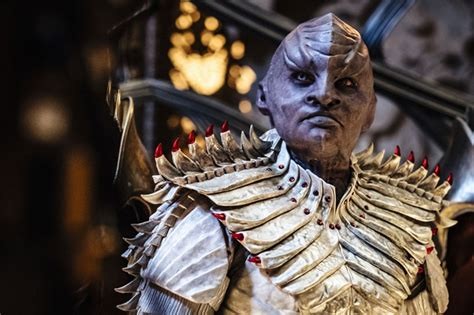
I absolutely loved that look for the Klingons. I was so sad to see it meekly watered down in later episodes. It’s what they should have done in The Motion Picture!
Discovery is my least preferred star trek I’ve watched so far, I mean, it’s not “bad” per se, it’s just different from the rest of star trek and has a different formula.
The thing with discovery is that everything happens really fast, there’s always a sense of urgency and hurry, but actual plot development happens really slowly.
Conflict takes a whole season to resolve, instead of standard one episode which you expect from a star trek show.
Also, I hate how the actors mumble instead of talking.
It’s not bad, it’s just not my favourite format.
Discovery’s characters are somehow simultaneously boring yet also obnoxious jackasses. The writers of the show apparently thought Star Trek would be more interesting if everyone in the future had, instead of professionalism and humanism, histrionic personality disorder and chronic hemorrhoids.
I love Discovery. Some of the criticisms are valid; every season has a few dumb moments that make me shake my head. But I love the characters, the actors are all great, Doug Jones in particular is a treasure, and the first contact in season 4 feels more like a proper science fiction scenario than any other in Trek.
One thing to keep in mind is that the tone shifts considerably season to season. It starts off quite grim and gritty, but don’t expect it to stay that way.
It’s fine.
And those that disagree should be forced to watch Star Trek: Section 31 until they can have a reasonable conversation like an adult.
Naw it’s a journey. I accepted discovery like I did voyager. Once I saw what it was in it own, much better. Second watch got better, just like voyager.