

For me, as long as Debian still packages it and disables these features, I’ll be fine, but LibreWolf looks more and more tempting these days, and having tried it a bit, I can live with the minor annoyances.
“Life forms. You precious little lifeforms. You tiny little lifeforms. Where are you?”
- Lt. Cmdr Data, Star Trek: Generations


For me, as long as Debian still packages it and disables these features, I’ll be fine, but LibreWolf looks more and more tempting these days, and having tried it a bit, I can live with the minor annoyances.


I feel like it was more than the package manager whining; I think xorg literally wouldn’t start after the update, although it’s been so long now that I could be misremembering.
Honestly, I probably could have salvaged the install if I’d wanted to without too much difficulty, but it was just a VM for testing distro packaging rather than a daily driver device.
Still, what you say is good to know, and perhaps I should hold back on the Pacman slander. I’ve just been using Debian for around 4 years now and had pretty good reliability; then again, Debian (and most distros, with their pitiful documentation) would probably be very hard to use without Archwiki.


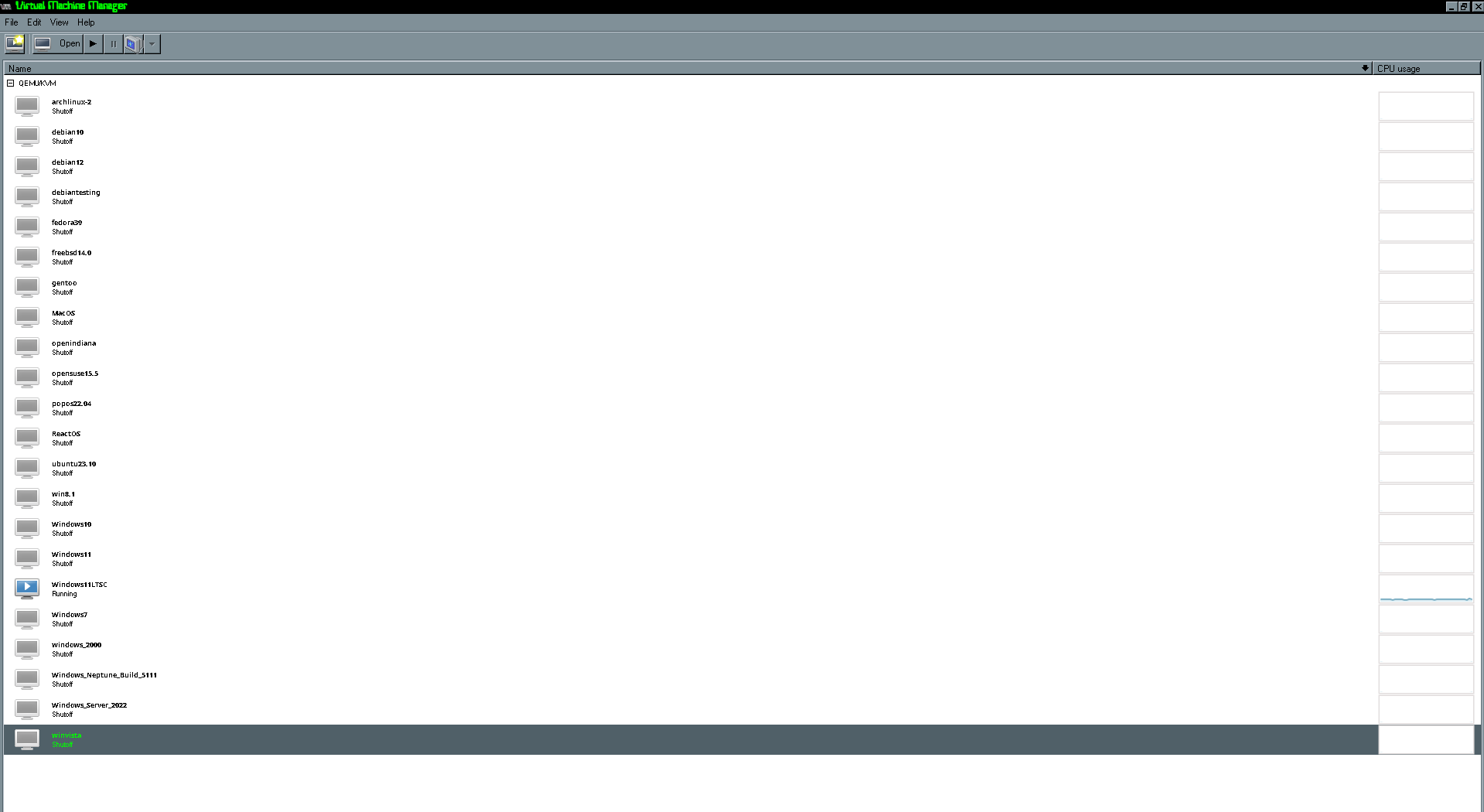
Eh, I disagree with you on Pacman. It could be possible I was doing something stupid, but I’ve had Arch VMs where I didn’t open them for three months, and when I tried to update them I got a colossally messed up install.
I just made a new VM, as I really only need it when I need to make sure a package has the correct dependencies on Arch.


Eh; testing doesn’t break THAT often. Having used it on many of my devices for almost 4 years, I can count on one hand the number of times it broke in a way I had to chroot in to fix it.
This is very unlikely to be because they are using testing.
Still, using Debian Stable is probably a smarter idea for this user.


I like using this on my desktop, but it’s way too easy to trigger this by accident on a laptop, so I disable it on there.


My best guess is that it’s not a Flatpak permissions issue as others are claiming; the software is just trying to use your iGPU (which is usually crappy) instead of your dGPU.
Try taking whatever command you use to start the program and tacking DRI_PRIME=1 on the front. This has often worked for me on applications regardless of whether they’re native or Flatpak.


iOS has been getting a bit buggier for me these past few years, but iOS 26 is a whole other level of bad.
With what Google’s been doing to AOSP, I just hope GrapheneOS and LineageOS can hold on just long enough until we can get some livable solution for Linux phones.


I like to use pythonz in this case; it’s a tool to manage Python installs, and it puts the installs in a directory under your home directory, not affecting anything in the system.
It does build each version from source, which introduces some quirks; I’ve found compilation for some Python versions works better with clang, and sometimes, you need to enable build options.
Still, I think this is a good way to do things; just start whichever Python version you want, and then create a venv with it.


The year of Linux on the desktop was the friends we made along the way…


No, I don’t want to spend weeks to learn GDB inside-out, so I don’t have to search online for 15-30 minutes on an AI infested internet every time I want to use it, for each feature I’m using it for that day.
No, I don’t want to gatekeep Linux from “normies”, by making it as user-unfriendly as possible, so I can keep the Linux community a frat club for slur saying techbros.
For your sake, I must emphasize that insulting the people you want help from is not an effective tactic for obtaining help. There are certainly jerks in the broader Linux community, but effectively accusing anyone in this community unable to give you exactly what you want of being a “slur saying techbro” (unless I misunderstand you) is, no offense, an incredibly entitled view to have.
If you wish to make valuable use of internet forums, I would request you take heed of this: www.catb.org/~esr/faqs/smart-questions.html
Anyhow, I wish you luck in your endeavors.


In practice, Machine Owner Keys are a thing, though it depends on Microsoft still signing shim, I believe.
Having Microsoft in the chain of trust rather than a standards body is rather concerning, though.
Modern hardware absolutely should have an encryption processor; TPM just isn’t great.


Eh, the Pegasus tattoo doesn’t look great; half of it is missing. Must be embedded in the skin or something…


Maybe it’s just I’m a relative noob to build systems, but gosh, do I love Meson.
The documentation’s pretty okay - not perfect, but better than cmake - and it feels like I can actually learn it by example through looking at other projects’ setups.
I can live with using other build systems for other projects, but for personal projects, I’ll always choose Meson. I’ll always push for it if a project I’m working on needs to choose a build system.
You could do signup through a form and just throw a QR code on a poster.
My university Linux Users Group usually uses Crytpad (which is FOSS and seems federated, and has a flagship instance) to create forms for votes, so that might do the trick for you.
Maybe ask around and request to put up posters in a local library?
Also, see if your local university has a group already, and maybe if the age difference isn’t creepy, see if you can hang with them.


Zaphod’s just zis guy, you know?


It gets less essential the more memory you have, though I have 32GB of RAM on my desktop and still have 32GB swap space, which is probably way overkill, but I can afford it for now become I have a 2TB SSD that still has several hundred gigabytes left and could probably have a bit freed. With the memory shortage caused by “artificial intelligence” companies, I may have to go less crazy on the storage now, though.


If I had any close friends who used Linux, I would install this for April fools.


That just sounds like insufficient swap space, honestly. For part of the summer of 2024, I used a laptop from 2016 with 8 GB of RAM as my man portable devicr. The swap partition size I used was fine for most things but a but small; however, I’d occasionally run Spleeter and run out of memory, leading to the issues you experienced, which were alleviated by just adding a temporary swap file. Before that, I used a gen 1 Surface Go, also with 8 GB RAM.
The GPU driver issue would really only be a problem for Nvidia stuff.